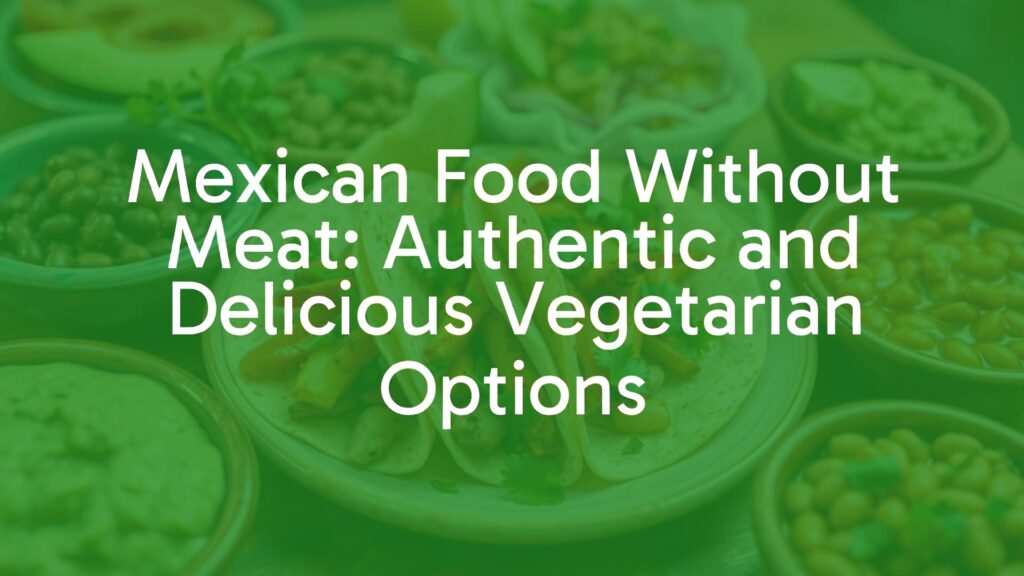
Do you love Mexican food but prefer to avoid meat? You’re in the right spot! Mexican cooking, known for its rich flavors and traditions, is very easy to adapt for meat-free eating. In fact, lots of classic Mexican dishes are already vegetarian, and most recipes can be quickly changed to avoid meat while still tasting great. Whether you are a long-time vegetarian, trying to eat less meat, or just want more vegetables in your meals, Mexican food without meat offers tasty and authentic options for everyone.

Mexican Food Without Meat: Main Ideas and Benefits
Why Is Mexican Food Easy to Make Without Meat?
The basics of Mexican cuisine come from plant-based foods. Before meat became common, people in Mexico based their meals on crops like corn, beans, squash, chiles, and different vegetables. These ingredients provide lots of flavor, texture, and nutrition, so you don’t need meat to make Mexican food delicious. Spices, fresh herbs, and vegetables add layers of taste and make plant-based Mexican food just as satisfying as the original dishes.
Think of spicy salsas, warm beans, mushrooms, and crunchy veggies – they’re all naturally part of traditional Mexican dishes. These foods bring both taste and nutrition, so switching to meatless meals can be simple, healthy, and enjoyable. Using lots of fresh and seasonal produce means you get meals that are filling, colorful, and full of flavor, all without meat.
Why Choose Meatless Mexican Dishes?
Many people are turning to meatless Mexican meals for a few reasons. Health is a key factor, since plant-based Mexican food is often high in fiber, vitamins, minerals, and usually lower in saturated fat and cholesterol compared to dishes with a lot of meat. This can help with weight management and overall health.
Caring for the environment and animals is another common reason. Plant-based eating reduces your environmental impact and can support better food systems. And let’s not forget – trying meat-free cooking brings in new flavors and cooking styles, showing that you don’t need meat for a delicious Mexican meal. There are lots of creative ways to prepare and enjoy traditional dishes without animal products.
Are Plant-Based Mexican Dishes Old or New?
Plant-based Mexican recipes are both traditional and modern. Many old recipes used only local crops like beans, corn, squash, and chiles. Dishes such as tamales, enchiladas, quesadillas, and elote (street corn) have always had vegetarian versions.
Now, more people are interested in vegan or vegetarian food, so cooks are creating new plant-based versions of classic favorites. For example, many use mushrooms, jackfruit, or new plant proteins to replace the texture of meat. You’ll find both classic old recipes and modern takes, so there are plenty of options whether you want something authentic or something new.
Common Ingredients in Meatless Mexican Cooking
Beans and Legumes in Mexican Recipes
Beans and other legumes are some of the most important foods in meatless Mexican cooking. Black beans show up in soups, tacos, burritos, and more. Their earthy flavor works great in many dishes. Pinto beans are also popular and used for refried beans (note: sometimes these are cooked with lard, so check if they’re truly vegetarian). Plenty of grocery store and homemade recipes now use vegetable oil instead.
Lentils are becoming common too, especially in things like lentil tacos. Chickpeas also appear in modern recipes, bringing extra protein and texture to salads and tostadas. See the list below for some common legumes in Mexican cooking:
| Legume | Common Use |
|---|---|
| Black beans | Salsas, soups, fillings |
| Pinto beans | Refried beans, side dishes |
| Lentils | Tacos, soups |
| Chickpeas | Salads, tostadas |
Grains, Vegetables, and Plant Proteins
Besides beans, Mexican meals without meat use plenty of grains and a wide range of vegetables. Corn is especially common, used in tortillas, masa (dough for tamales), and as corn on the cob (elote). Mexican rice, usually cooked with tomato and spices, makes a simple side dish or filling.
Vegetables are everywhere in Mexican cooking. Bell peppers and onions are found in salsas and fajitas. Zucchini (calabacitas) brings sweetness and tenderness, while potatoes and sweet potatoes add bulk to tacos or casseroles. Spinach is sometimes used for extra nutrition. Mushrooms stand out as a favorite meat substitute, especially portobellos, because they are “meaty” in texture and taste great in tacos and more. Other vegetables like cactus pads (nopales) are also part of traditional cooking.

Herbs, Spices, and Sauces for Real Mexican Flavor
The real taste of Mexican food comes from its spices, herbs, and sauces. Cumin, chili powder, paprika, and oregano are basic spices in Mexican recipes, offering warmth and fragrance.
Fresh herbs, especially cilantro, add freshness and brightness. Epazote is sometimes used in bean dishes for its unique flavor. Chiles (like ancho, pasilla, jalapeño, and serrano) are important for heat and depth, and they can be used fresh, dried, or roasted. Common sauces – like salsa verde, enchilada sauce, and guacamole – help tie the meal together by bringing spicy, tangy, or creamy flavors to each bite.
Types of Mexican Food Without Meat
Traditional Vegetarian Mexican Dishes
Lots of Mexican dishes are vegetarian by nature. For example, Chiles Rellenos (stuffed peppers with cheese) are a classic vegetarian main dish, and Sopa de Lentejas (lentil soup) is another traditional, hearty option. Other examples include:
- Huevos Rancheros – eggs on tortillas with salsa
- Enfrijoladas – tortillas dipped in bean sauce, often filled with cheese
- Elotes – corn on the cob with mayo, cheese, and chili
- Tostadas – crispy tortillas topped with beans, lettuce, and cheese

Vegan Versions of Mexican Favorites
Many Mexican favorites now have plant-based versions. Some popular examples are:
- Vegan tacos filled with roasted cauliflower, spiced lentils, mushrooms, or shredded jackfruit (often used to mimic pulled pork)
- Vegan enchiladas or quesadillas made with dairy-free cheese or flavorful veggies
- Tamales using vegetable oil instead of lard, with plant-based fillings like poblano peppers and vegan cheese, or sweet fruits
- Dairy-free versions of dishes like rajas con crema, using plant-based creams
Eggs and Dairy in Meatless Mexican Food
Many Mexican dishes without meat still include eggs and/or dairy, making them “vegetarian” but not vegan. Eggs are common in:
- Huevos Rancheros
- Migas (scrambled eggs with tortillas and cheese)
- Cheese quesadillas
Cheese is also used a lot – in enchiladas, quesadillas, and as toppings. Mexican crema or sour cream adds a cool finish to spicy dishes. It’s easy to find or make vegan versions if you avoid all animal products.
Popular Meatless Mexican Recipes
Vegetarian Tacos, Burritos, and Quesadillas
Tacos, burritos, and quesadillas are some of the most customizable Mexican foods. Here are some ideas for fillings:
- Black bean tacos with guacamole and salsa
- Cauliflower or sweet potato tacos (sometimes battered and baked to mimic fish)
- Lentil tacos with taco spices and fresh toppings
- Mushroom or spinach quesadillas with cheese or plant-based cheese
- Black bean and rice burritos with veggies like peppers and onions
Soups and Stews: Lentil Soup & Black Bean Soup
Mexican soups and stews made without meat are warm and hearty. Classic examples:
- Lentil soup with vegetables
- Black bean soup with onions, peppers, and tomatoes
- Butternut squash soup with smoky chipotle
These soups are filling, full of fiber and protein, and well-suited for a chilly day.
Enchiladas, Chilaquiles, and Vegetarian Casseroles
Enchiladas and chilaquiles are comfort foods that easily adapt to meatless cooking. Common vegetarian fillings include cheese, beans, and any mix of sautéed veggies. Some popular combinations:
- Cheese and onion enchiladas
- Black bean and rice enchiladas
- Veggie chilaquiles (tortilla chips simmered in salsa and topped with cheese and crema)
- Vegetable casseroles like sweet potato and black bean bakes
Street Food: Elotes, Sopes, and Tostadas
Street foods are another area where Mexican recipes shine without meat. Some favorites:
- Elotes: Grilled corn with mayonnaise, cheese, and chili powder
- Sopes: Thick corn cakes topped with refried beans, cheese, lettuce, and salsa
- Tostadas: Crunchy tortillas with refried beans, veggies, salsa, or avocado
These options are both satisfying and easy to prepare at home or enjoy from food stands.

Salsas, Guacamole, and Other Dips
No Mexican meal is complete without salsas and dips, which are almost always plant-based. Some classics:
- Guacamole: avocado, lime, cilantro, onion, and jalapeño
- Pico de gallo: chopped tomatoes, onion, jalapeño, cilantro
- Salsa verde: tomatillos, green chiles, cilantro
- Corn salsa: sweet corn, lime, and veggies
- Bean dips and cheese dips (use dairy-free options for vegan versions)
How to Make Mexican Food Without Meat Taste Authentic
How to Swap Meat and Keep Good Texture and Taste
If you want your Mexican dishes to still feel “meaty” without animal protein, good substitutes are mushrooms (especially portobello and oyster mushrooms) and jackfruit, since they have a satisfying bite. Black beans, pinto beans, and lentils add hearty body. You can also use plant-based ground products or cooked quinoa for a texture similar to ground meat in tacos or burritos. Season well with cumin, chili powder, oregano, and brown your ingredients to build deep flavor.
Pantry Staples for Meatless Mexican Cooking
A Mexican meatless kitchen might include:
- Canned and dried black beans, pinto beans, and lentils
- Corn tortillas, masa harina, fresh or frozen corn
- Different dried and fresh chiles
- Canned tomatoes and tomatillos
- Onions and garlic
- Fresh cilantro and dried Mexican oregano
- Cumin, chili powder, paprika
With these, it’s easy to make real Mexican taste at home.
Tips for Adding Richness to Vegetarian Dishes
To give your meatless dishes a big flavor boost:
- Roast vegetables like peppers, onions, and tomatoes to bring out sweetness
- Char or grill veggies for a smoky touch
- Use mushrooms for a “meaty” flavor
- Add tomato paste or adobo sauce for richness
- Add a bit of vinegar or lime juice at the end for brightness
- Always toast your spices to bring out their best flavor
These steps help your vegetarian meals taste just as deep and complex as any meat-based dish.
Nutritional Highlights of Meat-Free Mexican Food
Where Do the Protein, Fiber, and Nutrients Come From?
Meatless Mexican food offers lots of nutrition. Beans and legumes bring both protein and fiber. Corn tortillas and quinoa provide more protein and complex carbs. Vegetables like bell peppers, tomatoes, spinach, and squash add vitamins and minerals. Avocado is full of good fats and potassium. Even the spices you use can offer healthy antioxidants. Below is a quick reference:
| Ingredient | Main Nutrients |
|---|---|
| Black beans | Protein, fiber, iron |
| Quinoa | Protein, iron, magnesium |
| Spinach | Vitamins A and C, iron |
| Avocado | Healthy fats, potassium |
How to Make Balanced Meatless Mexican Meals
To build a balanced meal, combine beans (or another legume) for protein, corn tortillas or rice for carbs, and lots of vegetables for vitamins and minerals. Healthy fats from avocado or pumpkin seeds complete the plate. For example, black bean tacos with corn salsa and guacamole make a satisfying, balanced meal. Mix and match these ingredients for endless options that keep you full and energized.
How Does Meatless Mexican Food Compare to Meat-Based Meals?
Mexican food without meat is usually lower in saturated fat and cholesterol. It provides more fiber (great for digestion) and is packed with vitamins and minerals because of the many vegetables and beans used. While meat gives protein and iron, so do beans, quinoa, and greens. Many people find that after eating meatless Mexican food, they feel lighter and more energized. In many ways, going meat-free with Mexican cuisine is the healthier option.
Fun Ways to Eat Mexican Food Without Meat
Ideas for Family Dinners and Parties
Meatless Mexican food works well for family meals and parties. Here are some ideas:
- Set up a taco bar with different fillings: seasoned beans, roasted veggies, mushrooms, and toppings like salsa and guacamole
- Vegetable and bean quesadillas for a quick, cheesy main
- Seven-layer dips, mini elotes, or tostadas for appetizers
- Big pans of enchiladas or black bean chili for gatherings
- Agua fresca (fruit water) or traditional desserts like churros for a sweet finish
Quick Recipes and Meal Prep Tips
Many meatless Mexican recipes are quick to make and easy to prep in advance. Suggestions include:
- One-pan taco skillets with quinoa, beans, veggies
- Veggie fajitas or quesadillas cooked in minutes
- Batch-cook beans or rice for use all week in salads, bowls, burritos
- Keep chopped vegetables and salsa on hand for fast meals
- Assemble casseroles ahead, then bake when ready to eat
These ideas make healthy, homemade meals easy any time.
Common Questions About Mexican Food Without Meat
Is Mexican Rice Always Vegetarian?
No, not always. Mexican rice (arroz rojo) is sometimes cooked with chicken stock. You can easily make it vegetarian by using vegetable broth instead. Many restaurants do this too, so just ask if you’re unsure. At home, use vegetable stock for rice that is fully meat-free.
Are Refried Beans Always Without Meat?
No. In Mexico, refried beans (frijoles refritos) are often made with pork lard. However, most canned refried beans in stores use vegetable oil and are labeled vegetarian or “lard-free.” When eating out, double-check with your server. Making your own is simple – just use vegetable oil.
What Are Some Real Vegan Mexican Dishes?
Many authentic Mexican recipes are already vegan, or very easy to make so. Examples include:
- Guacamole – made from avocado, lime, onion, and cilantro
- Pico de gallo or salsa verde – tomato or tomatillo based salsas
- Corn tortillas – corn, water, and lime only
- Tortilla soup (with vegetable broth instead of chicken)
- Tamales with plant-based fillings and vegetable oil masa
- Pot beans cooked with no lard
- Elotes made without cheese and with vegan mayo
Understanding the traditional ingredients is the best way to enjoy real vegan Mexican food.
